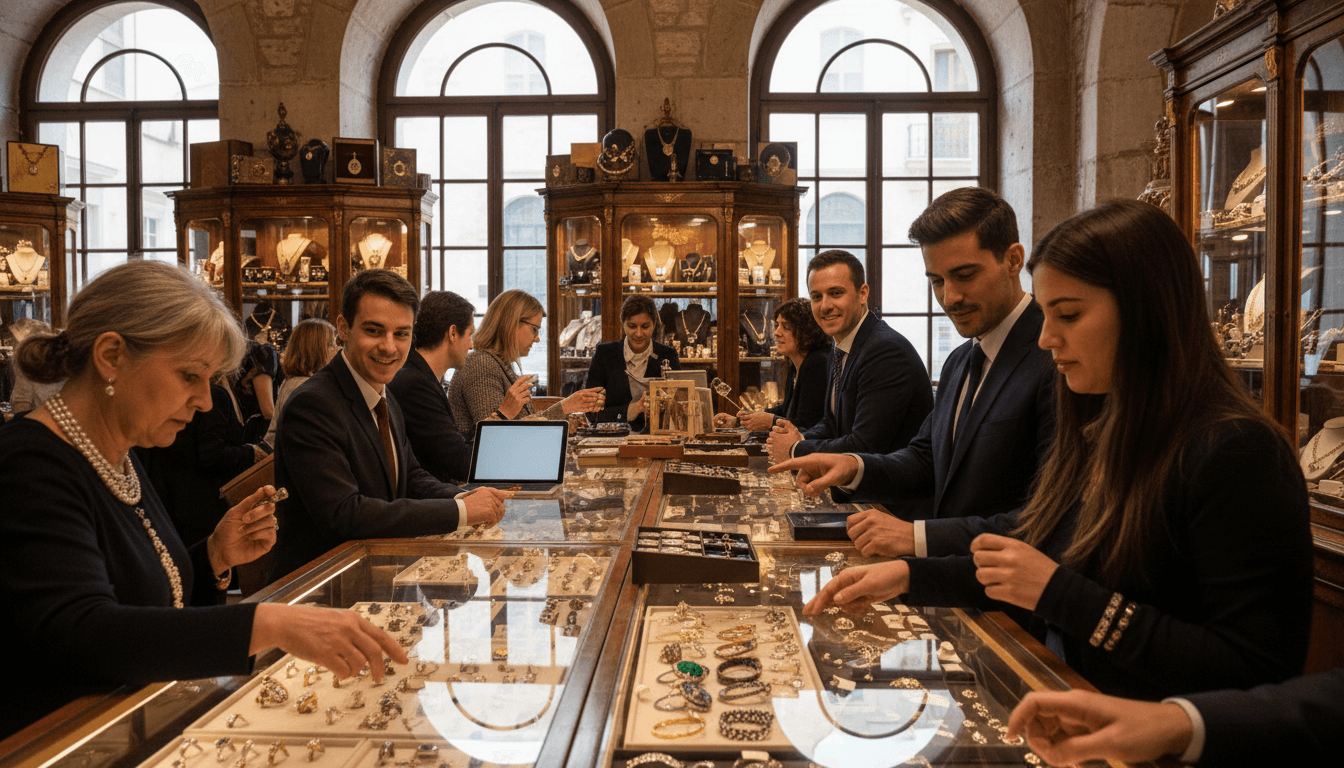
The luxury jewelry sector is undergoing a profound transformation, with the secondhand market emerging as a powerful force. Historically perceived as a niche, pre-owned luxury jewelry has evolved into a mainstream segment, driven by a convergence of sustainability imperatives, economic factors, and shifting consumer values. According to Secondhand Luxury Market Research, this segment is not merely growing but actively disrupting traditional luxury retail dynamics. Consumers are increasingly drawn to the unique narratives, superior craftsmanship, and inherent value retention of pre-owned pieces, challenging the industry to embrace circularity and transparency. This article delves into the key drivers, market impact, and future trajectory of this burgeoning market.
In-Depth Analysis
Market Momentum and Exponential Growth
The secondhand luxury jewelry market is demonstrating robust growth, with annual expansion rates estimated between 10-15% globally, significantly outpacing the primary luxury market. This momentum is underpinned by increased platform diversification, from auction houses like Sotheby's and Christie's to dedicated online marketplaces such as The RealReal and Vestiaire Collective. Market analysts project the segment to reach a valuation exceeding $30 billion by 2027. Key factors propelling this growth include the democratization of luxury access, where consumers can acquire prestigious brands like Cartier, Van Cleef & Arpels, and Bulgari at accessible price points. Additionally, the strong growth in secondhand segments is reinforced by improved authentication technologies and certification processes, bolstering consumer confidence in pre-owned acquisitions.
Sustainability and Ethical Consumption as Core Drivers
Environmental and economic considerations are primary motivators for modern luxury consumers. A 2024 consumer survey revealed that over 65% of luxury jewelry buyers consider sustainability a critical factor in purchasing decisions. The secondhand market directly addresses this by promoting a circular economy, reducing the demand for new mining and its associated ecological footprint. For instance, purchasing a pre-owned diamond piece can save approximately 50-60% of the carbon emissions linked to new diamond extraction and processing. Brands are responding by launching dedicated resale programs and emphasizing recycled precious metals and conflict-free gemstones. This sustainability-driven consumer choice is reshaping production ethics and supply chain transparency across the luxury jewelry industry.
Evolution in Consumer Perception and Value Proposition
The changing perception of pre-owned luxury marks a cultural shift from ownership of 'new' to appreciation of 'heritage.' Previously associated with stigma, secondhand luxury jewelry is now celebrated for its uniqueness, history, and investment potential. Vintage pieces from eras like Art Deco or Retro are particularly coveted, often appreciating in value more steadily than contemporary designs. Economic considerations also play a pivotal role; consumers can acquire high-quality pieces at 30-50% below retail prices, making luxury more accessible. This value proposition is especially appealing to younger demographics, such as Millennials and Gen Z, who prioritize experiential and meaningful purchases over conspicuous consumption, further accelerating market adoption.
Disruption in Traditional Luxury Retail Models
The rise of the secondhand market is disrupting traditional luxury retail by compelling brands to innovate or risk obsolescence. Established houses are integrating resale initiatives; for example, Richemont acquired Watchfinder & Co. and launched certified pre-owned programs for brands like IWC and Panerai. This market impact extends to retail strategies, with brands enhancing in-store experiences to include vintage collections and authentication services. Furthermore, the proliferation of digital platforms has decentralized access, allowing global consumers to participate in the secondary market effortlessly. Traditional retailers are now collaborating with resale platforms to capture this segment, blending primary and secondary sales channels to create a holistic luxury ecosystem that caters to evolving consumer expectations.
Key Takeaways
The secondhand luxury jewelry market is growing at 10-15% annually, significantly faster than the primary market.
Sustainability and economic value are the top drivers, with over 65% of consumers prioritizing ethical considerations.
Consumer perception has shifted from stigma to valuing heritage, uniqueness, and investment potential in pre-owned pieces.
Traditional luxury brands are adapting through resale programs and certifications to stay relevant and capture market share.
Digital platforms and authentication technologies are crucial enablers, boosting consumer confidence and market accessibility.
Frequently Asked Questions
Is secondhand luxury jewelry a good investment?
Yes, pre-owned luxury jewelry often retains or appreciates in value, especially for iconic pieces from renowned brands or limited editions. Factors like craftsmanship, rarity, and condition significantly influence investment potential, with vintage items frequently outperforming new purchases in long-term value retention.
How can I ensure the authenticity of pre-owned luxury jewelry?
Purchase from reputable platforms offering certifications from recognized gemological institutes (e.g., GIA, AGS) and brand authentication. Many sellers provide detailed provenance records and independent appraisals. It's advisable to verify hallmarks, serial numbers, and request third-party verification for high-value items.
What are the environmental benefits of buying secondhand luxury jewelry?
Buying pre-owned jewelry reduces the demand for new mining, conserving natural resources and minimizing carbon emissions. The circular economy model decreases waste and environmental degradation associated with extraction and manufacturing, making it a sustainable alternative to new luxury purchases.
How is the secondhand market influencing new luxury jewelry designs?
Brands are increasingly designing with longevity and resale value in mind, using durable materials and timeless aesthetics. Some are launching 'archive' or 'heritage' collections inspired by vintage designs to appeal to secondhand market trends, emphasizing craftsmanship and narrative to enhance future resale appeal.
Conclusion
The secondhand luxury jewelry market is no longer a peripheral segment but a central force redefining the luxury landscape. Driven by sustainability, economic pragmatism, and evolving consumer values, it challenges traditional retail paradigms and encourages industry-wide innovation. As authentication technologies advance and circular economy principles gain traction, this market is poised for sustained growth. Luxury brands must continue to adapt by integrating resale strategies and emphasizing transparency to thrive in this new era. Ultimately, the rise of pre-owned luxury jewelry signifies a broader shift towards conscious consumption, where value, heritage, and sustainability converge to shape the future of high-end retail.
Tags
Related Articles
Building Unshakeable Consumer Confidence in Luxury Jewelry
In the high-stakes luxury jewelry market, consumer trust is the ultimate currency. Leading brands are implementing comprehensive certification processes, rigorous product testing, and transparent communication strategies to establish authenticity as a critical market differentiator. With over 68% of luxury consumers citing trust as their primary purchasing factor, investments in quality control and verification systems are yielding measurable returns in customer loyalty and market share.
Luxury Jewelry Price Dynamics: Navigating Exclusivity and Value in Modern Markets
The luxury jewelry sector employs sophisticated pricing strategies that balance exclusivity with market accessibility. Key factors driving value include customization, limited edition collections, and craftsmanship, with brands adopting flexible approaches to cater to diverse consumer segments. This article explores how these dynamics influence product valuation, consumer perception, and long-term brand equity in the global luxury landscape, supported by industry data and strategic insights.
Luxury Jewelry Market Evolution 2024-2032: Trends, Drivers, and Future Projections
The global luxury jewelry market is set for robust expansion, projected to grow from USD 61 billion in 2024 to USD 109 billion by 2032 at a CAGR of 7.55%. This growth is fueled by increasing consumer demand for sustainable, ethically sourced materials, gender-neutral designs, and personalized jewelry. Technological advancements and shifting market dynamics are reshaping the industry, offering opportunities for innovation and strategic brand positioning.
Luxury Jewelry Production and Sourcing: Navigating Ethical and Sustainable Transformations
The luxury jewelry industry is experiencing a paradigm shift driven by consumer demand for ethical sourcing, sustainable production methods, and supply chain transparency. Brands are increasingly adopting responsible manufacturing practices, with over 65% of luxury consumers prioritizing sustainability in purchasing decisions. This article explores how ethical frameworks, technological innovations, and transparent operations are reshaping production landscapes, enhancing brand loyalty, and meeting rigorous environmental standards. Key trends include blockchain for traceability, artisanal collaborations, and circular economy initiatives that reduce waste and carbon footprints.
Gold and Precious Metals in Luxury Jewelry: Market Dynamics, Investment Appeal, and Cultural Significance
Gold continues to dominate the luxury jewelry sector, serving dual roles as a premier material for high-end adornment and a robust investment vehicle. The market has witnessed a surge in demand, with gold prices increasing over 25% in the past year and key regions like India reporting a 5% rise in 2024. This growth is underpinned by gold's enduring cultural importance, economic stability, and a global market valuation of USD 59.7 billion in 2024. As per the World Gold Council Report, these trends highlight gold's resilience and appeal in an evolving luxury landscape.

Digital Innovation in Luxury Jewelry: Transforming Design, Personalization, and Engagement
Digital technologies are revolutionizing the luxury jewelry sector by enabling advanced design processes, immersive customer experiences, and unprecedented levels of personalization. Innovations such as 3D printing and augmented reality are driving rapid adoption, allowing brands to enhance craftsmanship and deepen consumer connections. This article examines how these tools are reshaping market strategies and setting new standards for luxury in the digital age.