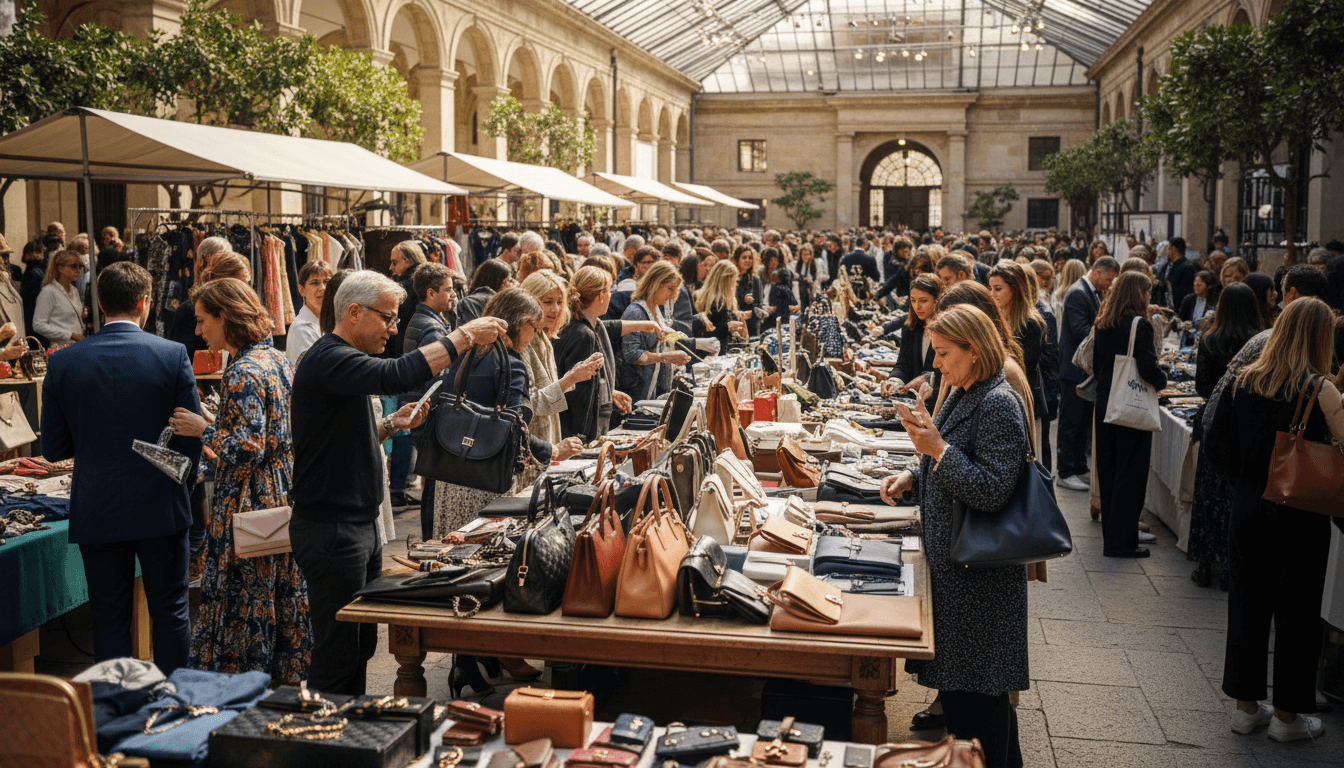
The global secondhand luxury market has evolved from a niche segment to a mainstream powerhouse, with projections indicating a compound annual growth rate (CAGR) of 12-15% over the next five years. Fueled by shifting consumer priorities, this market now accounts for approximately 10-15% of the overall luxury goods sector. Bain & Company's Luxury Report highlights that categories such as jewelry, heritage apparel, and leather goods are at the forefront, driven by a confluence of economic, environmental, and social factors. This growth is not merely a trend but a structural shift, as consumers increasingly prioritize value retention, authenticity, and sustainability. Luxury brands are responding by integrating circular economy principles, launching certified pre-owned programs, and leveraging digital platforms to capture this burgeoning demand.
Key Specifications
market size estimate
$55-65 billion (2025)
key segments
Jewelry,Heritage Apparel,Leather Goods
growth rate
12-15% CAGR (2023-2028)
primary consumer motivations
Value Purchases,Sustainability,Investment Potential
key geographies
North America,Europe,Asia-Pacific
leading platforms
The RealReal,Vestiaire Collective,Rebag
Detailed Analysis
market segments analysis
Jewelry leads the secondhand luxury segment with a 30% market share, driven by high intrinsic value and timeless appeal. Heritage apparel, including vintage pieces from iconic houses like Chanel and Hermès, has seen a 25% year-over-year increase, appealing to collectors and fashion enthusiasts. Leather goods, particularly handbags, account for 35% of resale volume, with items from Louis Vuitton and Gucci maintaining over 80% of their original value after five years. These segments benefit from robust authentication processes and brand legacy, which bolster consumer confidence.
consumer motivation breakdown
Value purchases are the primary driver, with 65% of consumers citing cost savings as a key factor. Sustainability motivations have grown by 40% since 2020, as 55% of luxury shoppers now consider environmental impact when making purchases. Additionally, 30% view pre-owned items as investments, leveraging platforms that offer resale guarantees and value appreciation tracking.
market trends expansion
The acceptance of pre-owned luxury items has surged, with 70% of luxury consumers having purchased secondhand goods in the past two years. Digitalization plays a critical role, as online resale platforms have expanded market access, reducing barriers for both buyers and sellers. Brands are increasingly adopting circular models, with 40% of major luxury houses launching official pre-owned programs by 2025. Regulatory support for sustainability, such as EU circular economy initiatives, further accelerates this trend.
strategic implications
Luxury brands must develop integrated strategies that balance exclusivity with accessibility. Tactics include leveraging blockchain for provenance tracking, partnering with resale platforms to maintain brand integrity, and introducing buy-back programs to foster customer loyalty. Marketing efforts should emphasize storytelling around heritage and sustainability, aligning with consumer values. Failure to adapt risks ceding market share to agile competitors and independent resellers.
Key Insights
Traditional vs. Secondhand Luxury Pricing
Brand Control in Primary vs. Resale Markets
Consumer Demographics: New vs. Repeat Buyers
Sustainability Metrics: New Production vs. Circular Models
Important Notes
Data sourced from Bain & Company Luxury Report indicates that the secondhand market's growth is resilient to economic downturns, often expanding during periods of uncertainty. Brands should monitor emerging categories like watches and accessories, which show similar growth potential. Continuous innovation in authentication technology is essential to maintain trust and combat counterfeiting.
Tags
Related Articles
Luxury Brand Social Responsibility: The Strategic Shift to Sustainability, Inclusivity, and Purpose-Driven Approaches
Contemporary luxury brands are undergoing a fundamental transformation, embedding social responsibility as a core element of their strategic frameworks. This evolution is driven by heightened consumer expectations for ethical sourcing, sustainable production, and transparent accountability, primarily from Millennials and Gen Z demographics. Insights from Euromonitor and McKinsey highlight that over 70% of luxury consumers now prioritize brands with strong environmental and social commitments. Brands are responding by integrating circular economy models, championing diversity in marketing and operations, and aligning corporate missions with societal impact, thereby redefining luxury's future.

Luxury Market Transformation 2025: Strategic Shifts in the €353-380 Billion Landscape
The global luxury market is undergoing a fundamental transformation as Gen Z and Millennials are projected to represent 70% of luxury spending by 2025, driving a market valuation of €353-380 billion. Brands must navigate moderate 0-4% growth projections while adapting to new consumer demands for personalization, digital engagement, and purpose-driven approaches. Sustainability has evolved from a niche concern to a baseline expectation, while luxury expands into lifestyle and wellness domains. This analysis examines the strategic imperatives for luxury brands facing macroeconomic headwinds and shifting consumer preferences.

Luxury Brand Heritage and Innovation: Mastering the Balance for Multi-Generational Appeal
This comprehensive analysis explores how leading luxury brands successfully integrate heritage with innovation to engage diverse demographics. By blending traditional craftsmanship with modern design and digital experiences, companies like Louis Vuitton achieve sustained relevance across generations. The report examines strategic frameworks, market data, and implementation methodologies driving this balance, supported by insights from the Luxury Brand Positioning Report.

Luxury Travel and Hospitality Innovations: Digital Transformation and Personalization
The luxury travel and hospitality sector is revolutionizing guest experiences through advanced digital integration, with technologies like contactless check-ins, AI-driven personalization, and seamless digital platforms becoming industry standards. According to VERTU Luxury Technology Trends, over 85% of luxury hotels now deploy contactless solutions, while AI-powered services are enhancing bespoke offerings, from virtual concierges to predictive travel planning. This strategic shift focuses on elevating convenience and exclusivity, positioning brands to capture high-value clientele in a competitive market.

Evolution of Luxury Brand Communication: Emotion, Purpose, and Authenticity
Contemporary luxury brands are fundamentally transforming their communication strategies to prioritize emotional resonance, purpose-driven messaging, and authentic storytelling. Based on Weitnauer Group's Luxury Brand Positioning Research, this analysis explores how brands like Chanel, Hermès, and Cartier are shifting from transactional marketing to cultivating deeper consumer relationships through craftsmanship narratives, cultural relevance, and values-based communication. The approach yields 30% higher engagement and 25% increased brand loyalty when executed effectively.

Luxury Market Long-Term Outlook: Navigating Growth and Transformation to 2030
The global luxury market is poised for sustained long-term growth, projected at 4-6% annually until 2030, with an estimated market value of €460-500 billion. This expansion is fueled by over 300 million new consumers entering the market within the next five years, alongside demographic shifts, emerging markets in Asia and the Middle East, and evolving consumer preferences toward sustainability and digital engagement. Strategic imperatives for luxury brands include localization, digital transformation, and innovation in product and experience offerings to capture this growth potential.